What Small High Streets Are Doing to Attract Visitors
Britain's smaller high streets have faced a decade of structural challenge. A notable number are finding creative approaches that pull in visitors and build genuine local loyalty — approaches that national chains simply cannot replicate.
Moving away from volume retail
The vacancy crisis on many high streets accelerated a shift that had been building for years: landlords and councils reducing their reliance on national chains and prioritising independent traders. A butcher, a specialty deli, a bookshop with an events programme, and a coffee shop with a workspace element each attract a different reason to visit. Collectively they generate footfall that a parade of betting shops and phone repair units cannot match.
Anchor units that double as community spaces have proven particularly effective. Libraries that host evening events, pubs that become morning coffee venues, and arts organisations that programme weekend markets all blur the line between retail and community. This makes the high street a reason to spend time rather than just a place to pass through on the way to something else.
Events as a weekly draw
Markets — farmers', artisan, street food — have revived footfall on otherwise quiet Saturdays across towns from Ludlow to Stroud to Harrogate. The model works because it creates a reason to visit on a specific day, establishing a habit. Regular visitors to the market often visit adjacent shops before or after, creating secondary spend for fixed retailers who benefit without doing anything differently.
Events calendars anchored to the seasons — a Christmas market, a summer food festival, an autumn foraging walk — give people from outside the town a reason to make a specific trip. Tourism and high street recovery are more closely connected than they first appear. Day-trippers who discover a high street through an event often return independently.
Physical character and walkability
Towns that have invested in pedestrianising or semi-pedestrianising their primary shopping streets consistently report improved dwell time and higher average spend per visitor. When visitors are not navigating traffic, they are more likely to pause, look in windows, and enter shops on impulse. The quality of public space — paving, seating, planting — signals whether a place values the people who come to it.
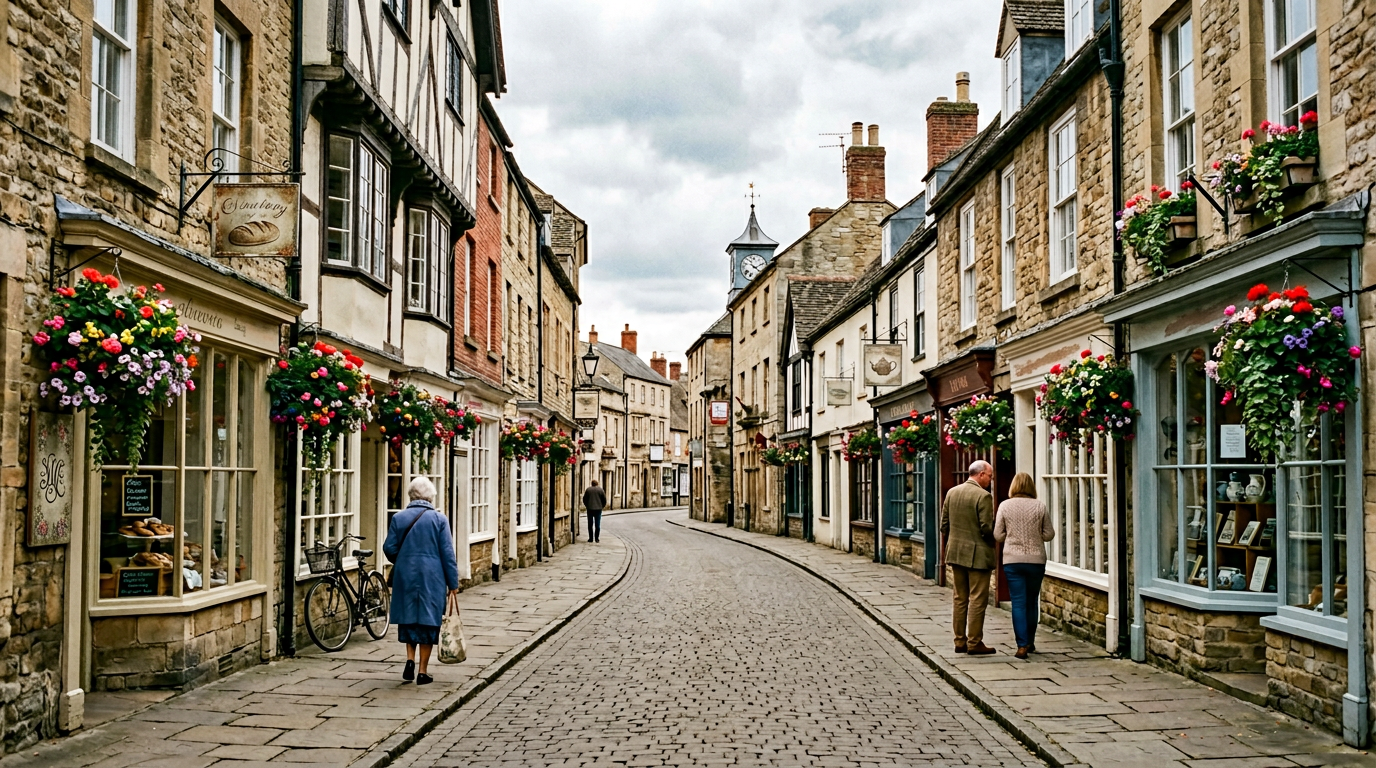
Independent retailers in towns with strong architectural character — Victorian market halls, Georgian terraces, converted mills — find that the building is as much a draw as the goods inside. The experience of being in a beautiful or interesting space is itself a reason to visit, and it is one that no out-of-town retail park can manufacture.
Local identity as a competitive advantage
National chains offer convenience and familiarity; they cannot offer the distinctive character of a specific place. High streets that lean into what is particular to their location — the local food tradition, the crafts heritage, the history of the town — create an experience that a retail park cannot replicate regardless of budget or effort.
Some of the most successful small high streets in the UK now function partly as destinations in their own right. The journey, the architecture, the food, and the shops are all part of the same proposition. Local identity, far from being a defensive retreat, has become the strongest competitive advantage available to smaller towns competing for visitor attention.
What towns can start doing now
High street improvement does not require large capital investment. A programme of regular weekly events, consistent window displays and outdoor presentation standards, and a coordinated social media presence representing the high street as a whole rather than individual traders produces visible results at modest cost. The coordination itself — getting traders to work together — is often the hardest part.
Business improvement districts (BIDs), where they exist and function well, provide the coordination infrastructure and modest shared funding that makes collective action possible. In towns without a BID, a voluntary traders' association with a defined committee and a small common budget can achieve similar coordination for the most important collective activities.
Key Takeaways
- Independent traders generate more distinctive footfall than national chains through variety and local character.
- Regular weekly markets create visit habits and encourage adjacent retail spending at fixed shops.
- Pedestrianisation consistently increases dwell time and impulse entry to shops on the street.
- Seasonal events attract visitors from outside the town and build a wider audience for the high street.
- Local identity and physical character are the strongest competitive advantages small high streets have over retail parks.