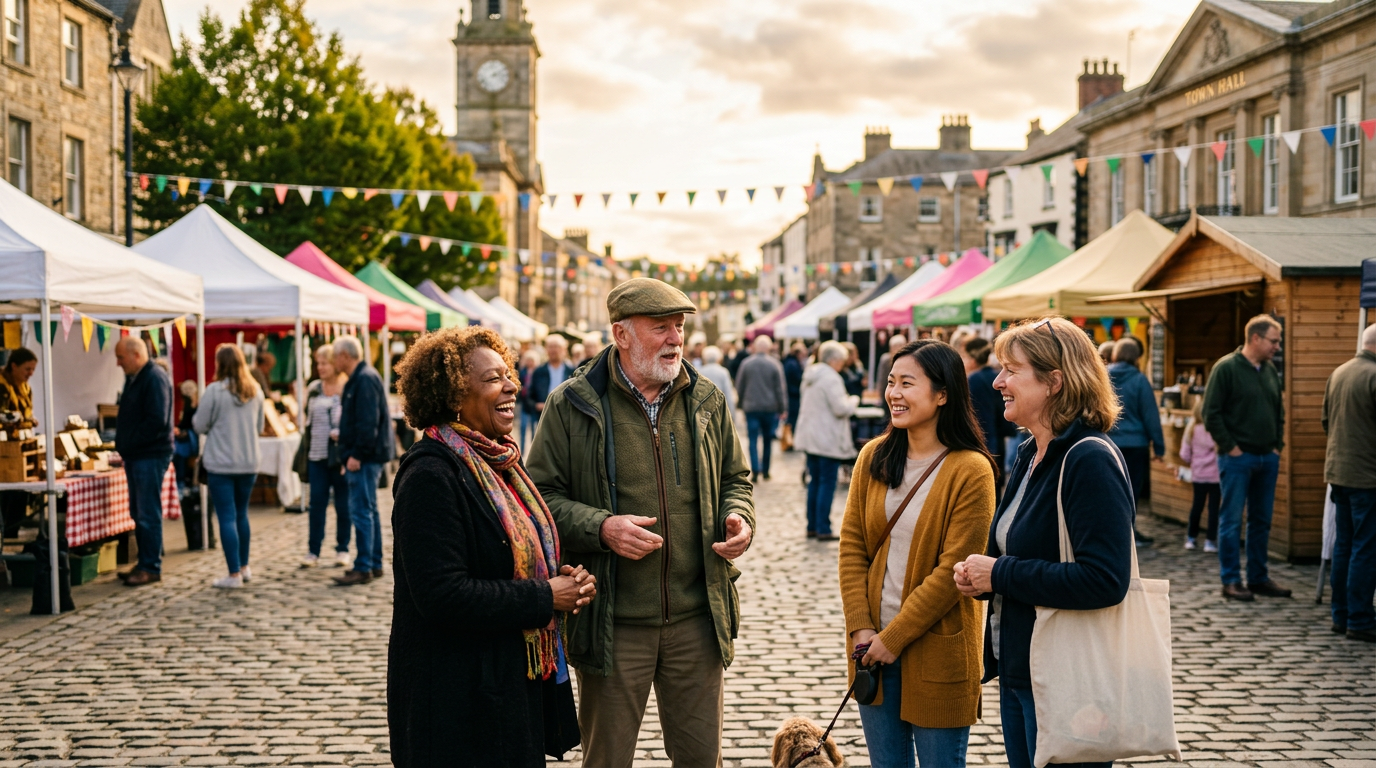
Community Events That Help New Residents Settle In
Moving to a new area is one of the most socially disorienting experiences adults regularly face. Community events designed with new residents in mind can dramatically shorten the time it takes to feel genuinely at home.
The social gap after moving
Most adults form their social networks through work, school, shared accommodation, or existing relationships. When a move disrupts all of these simultaneously — new job, no nearby friends, unfamiliar surroundings — the rebuild can take years without active intervention. Unlike students, who move into structured social environments, adult newcomers often arrive in houses or flats with no introduction to the people around them.
The consequences extend beyond personal comfort. Social isolation is associated with lower wellbeing, reduced civic participation, and greater pressure on health services. Communities with high turnover that do not actively welcome newcomers often struggle with cohesion, lower voter engagement, and weaker local identity over time.
Events that work versus events that don't
Welcome events hosted by councils or housing associations often fail because they feel official rather than convivial. A formal evening in a community hall with a presentation about bin collection schedules is not the kind of shared experience that produces lasting social connection. Events that work tend to be activity-based rather than passive, repeated rather than one-off, and run by residents rather than institutions.
Parkrun is perhaps the best UK example of an inadvertently effective community integration tool. It is weekly, free, beginner-friendly, and generates conversation naturally around a shared physical activity. New residents who join a local parkrun within weeks of moving typically report meeting more neighbours through it than through any other channel.
What councils and developers can enable
Planning obligations increasingly require housing developers to fund community infrastructure alongside homes. Where that infrastructure is used to create programmable space — halls, outdoor areas, community kitchens — rather than passive amenities, the value is significantly higher. Spaces designed for multiple simultaneous uses attract greater diversity of activity and enable the kind of spontaneous collision that builds community over time.
Libraries, sports centres, and faith buildings serve as existing hubs in many areas. Councils that resource these institutions to actively programme welcome events — newcomers' walks, seasonal suppers, skill-share afternoons — get a return in social cohesion that is difficult to quantify but well documented in wellbeing research across multiple UK authorities.
Finding what exists before starting something new
New residents who actively search for existing community structures often find more than expected. Local Facebook groups, Nextdoor neighbourhoods, community websites, and the village or parish notice board all carry information about running groups, volunteer rotas, and informal social occasions. The challenge is discovery — most of these structures exist but are not prominently visible to someone without existing local contacts.
Arriving with a specific interest — food, running, gardening, local history — and searching for a community around that interest is often more effective than attending generic welcome events. A person looking for a local allotment waiting list or a Tuesday evening choir will find their community faster and form deeper connections than someone attending a general newcomers' evening.
The role of regular, repeated contact
Single-event welcomes rarely produce the sustained social connection that makes people feel genuinely part of a community. The research on friendship and belonging consistently points to repeated low-stakes contact as the mechanism through which acquaintance becomes friendship. A weekly activity — whether running, board games, craft, or simply a regular walk — provides the repetition that deeper social bonds require.
Communities that design this repetition into their welcome infrastructure — a regular new-residents coffee morning for the first six months after moving in, a monthly newcomers' drinks — convert the initial welcome into lasting integration more reliably than any single event. The investment from the organisation is modest; the return in resident wellbeing and community cohesion is substantial.
Key Takeaways
- Activity-based repeated events create more lasting social connections than formal one-off welcome evenings.
- Regular weekly activities like parkrun are among the most effective and accessible integration tools available.
- Developer-funded community spaces are most valuable when designed for multiple simultaneous programmable uses.
- Search for existing local networks before creating new ones — most areas have more infrastructure than is visible to newcomers.
- Repeated low-stakes contact is the mechanism through which acquaintance becomes genuine community belonging.