Meal Prep Approaches for Busy Workweeks
Meal preparation succeeds when it is matched to realistic schedules, genuine cooking confidence, and actual eating habits. It fails when it demands four-hour Sunday sessions producing identical meals consumed without pleasure for five consecutive days.
The case for any preparation over none
Even minimal preparation — chopping vegetables on Sunday, cooking a batch of grains, doubling a weeknight recipe to freeze half — reduces the decision fatigue and time pressure of weekday eating. The value of meal prep is not in achieving a perfect system but in reducing the number of moments during a busy week when "there is nothing ready" leads to expensive takeaways or nutritionally poor alternatives that compound over time.
The most sustainable form of preparation is the one matched to the time actually available on a preparation day. A thirty-minute session that produces ingredients for three dinners is more useful and more likely to be repeated than a four-hour session that produces six weeks of freezer meals but exhausts you and leaves the kitchen requiring two hours of cleaning.
Batch cooking versus component preparation
Two distinct approaches suit different people. Batch cooking produces complete meals in quantity — a large pot of soup, a tray of roasted chicken thighs, a lasagne — that are refrigerated or frozen and reheated during the week. It is time-efficient per meal produced but creates less variety across the week, which for some people leads to declining motivation to eat what was prepared.
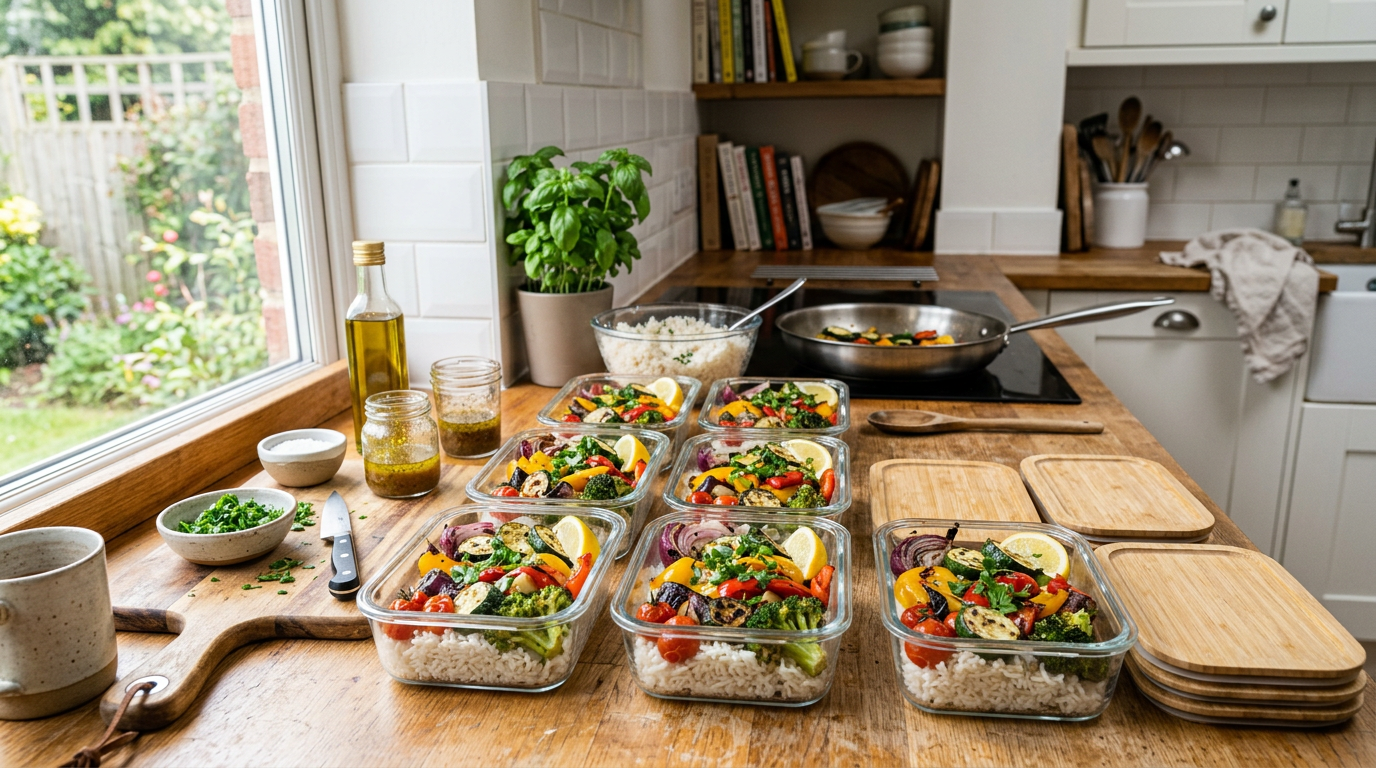
Component preparation — cooking grains, roasting vegetables, preparing protein, making sauces separately — provides building blocks that can be assembled in different combinations each day. This approach produces more variety and wastes less if plans change, but requires slightly more assembly time at each meal. The right choice depends honestly on how much variation matters to you in practice.
Planning around perishables
The most common source of food waste in prepared meals is not overcooking but poor sequencing. Fresh vegetables prepared on Sunday begin to deteriorate by Wednesday; leafy greens go faster still. Building the week's plan so that the most perishable components appear in Monday and Tuesday meals and more shelf-stable ones appear later reduces waste and keeps quality consistent throughout the week.
Pre-cut vegetables stored in airtight containers with a sheet of paper towel to absorb moisture last two to three days longer than unprepared ones left in their original packaging. Knowing which ingredients hold well — cooked grains, beans, roasted root vegetables, hard-boiled eggs — and which deteriorate quickly — dressed salads, delicate herbs, cut avocado — allows much better sequencing of the week's meals.
Efficient use of freezer capacity
A well-used freezer extends meal prep across weeks rather than just days. Soups, stews, cooked grains, cooked proteins, and most baked goods freeze reliably well. Portioning before freezing — into single-serving containers or clearly labelled zip bags — makes defrosting simple and reduces waste from having to thaw unnecessarily large quantities for a single meal.
The critical habit is labelling with both contents and date. Without dates, frozen food accumulates indefinitely and is eventually discarded with guilt and waste rather than satisfaction. With a consistent labelling habit, a well-managed freezer becomes a genuine reserve that can provide a home-cooked meal on a completely unplanned evening with five minutes of active work.
Keeping the system realistically light
The prep system that works is the one that does not require heroic effort or complex logistics to initiate each week. A recurring thirty-minute session twice a week — once at the weekend and once mid-week — is more sustainable than a single long session that requires specific conditions of time, energy, and motivation to begin.
Keeping a short running list of ingredients that need using — rather than planning an entire week's menu in advance — allows useful flexibility when plans change. Calibrating the prep effort to the week ahead also helps: a week with several planned restaurant meals or work events needs much less home preparation than a week spent entirely at home.
Key Takeaways
- Even thirty minutes of preparation on one day meaningfully reduces weekday decision fatigue and the temptation of expensive alternatives.
- Choose between batch cooking (complete meals) and component preparation (building blocks) based on your genuine preference for variety.
- Sequence perishable ingredients early in the week and more stable components later to minimise food waste.
- Label frozen portions with contents and date; a labelled freezer functions as a reliable emergency meal reserve.
- Two shorter prep sessions per week are more sustainable than one long session requiring exceptional motivation to start.